
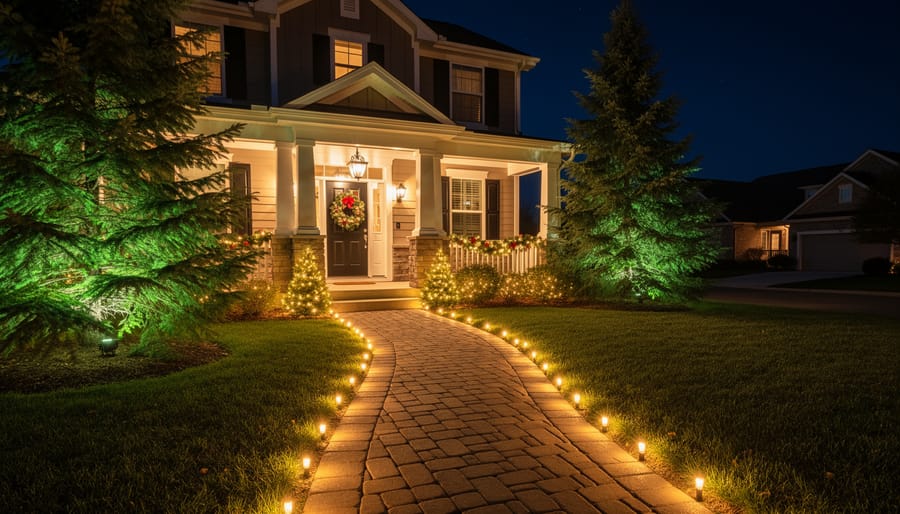
Your front yard transforms into a welcoming beacon when thoughtfully designed lighting highlights architectural features, illuminates pathways, and creates warm focal points that guide visitors from curb to doorstep. The most effective front yard lighting combines layered illumination techniques, uplighting trees and columns, washing façades with soft light, and defining borders with low-voltage fixtures, to craft a display that balances beauty with safety throughout the evening hours.
Creating an inviting nighttime presence requires more than simply adding fixtures to your landscape. The interplay between ambient illumination, accent lighting, and decorative elements establishes depth and dimension that flatters your home’s unique character. Whether your architecture calls for classic lantern-style sconces flanking the entryway or modern LED strips tracing clean geometric lines, each lighting choice should enhance rather than overpower your home’s natural appeal.
Professional designers approach front yard lighting as a carefully choreographed experience. Strategic placement draws the eye along intended sightlines, while proper intensity ensures each element receives just enough attention without creating harsh shadows or glaring hotspots. This thoughtful approach transforms ordinary evening curb appeal into an enchanting visual journey that makes your home memorable to passersby and welcoming to guests arriving after sunset.
The following collection presents distinct approaches to front yard illumination, from foundational techniques that every home can benefit from to innovative concepts that push creative boundaries while maintaining elegant restraint.
How We Selected These Front Yard Lighting Ideas
Choosing these eight lighting ideas wasn’t arbitrary. Each concept earned its place through a combination of design impact and real-world performance. Over years of creating holiday displays that stop traffic and delight homeowners, we’ve learned which approaches consistently deliver that perfect balance of visual magic and lasting satisfaction.
Our selection process focused on proven excellence across multiple dimensions:
- Curb appeal impact: Creates immediate visual transformation visible from the street
- Compatibility with various home styles: Works beautifully across architectural types from colonial to contemporary
- Safety and durability: Withstands winter weather while meeting electrical safety standards
- Ease of customization: Adapts to personal style preferences and budget ranges
- Seasonal versatility: Transitions smoothly from Thanksgiving through New Year’s celebrations
Energy efficiency played a crucial role in our evaluation. Modern LED systems offer ENERGY STAR power reduction that transforms what used to be a costly decoration into an affordable seasonal pleasure. We prioritized techniques that let you enjoy extended display periods without watching your utility bills soar.
Most importantly, these eight ideas represent concepts we’ve executed hundreds of times with consistently delighted clients. They’re not trendy experiments that might look dated next season. Instead, they’re timeless approaches enhanced by modern technology, giving you confidence that your investment will create beauty year after year while reflecting your home’s unique character.
1. Roofline Illumination: The Foundation of Front Yard Elegance
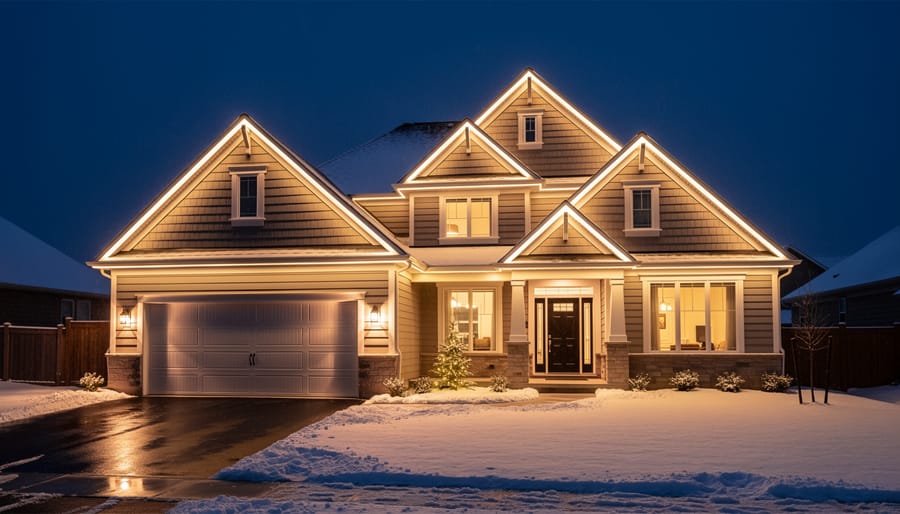
Outlining your roofline with Christmas lights creates the foundation that ties your entire front yard display together. This technique traces your home’s architectural profile against the night sky, transforming familiar lines into a glowing framework that catches attention from blocks away. When done thoughtfully, roofline illumination doesn’t just add lights to your house, it reveals and celebrates the unique character of your home’s design.
The choice between warm white and multicolored lights sets the tone for your entire display. Warm white creates an elegant, sophisticated look that complements traditional and contemporary architecture alike, offering timeless appeal that photographs beautifully. Multicolored lights bring nostalgic charm and playful energy, perfect for families wanting to capture that classic Christmas feeling. Some homeowners blend both approaches, using warm white along primary rooflines with colored accents on dormers or secondary features.
Spacing matters more than most people realize. Professional installations typically place lights 6 to 9 inches apart along the roofline for consistent coverage without gaps. Closer spacing creates a solid ribbon of light, while wider intervals produce a more delicate effect. The key is maintaining uniform spacing throughout, inconsistent gaps draw the eye in all the wrong ways.
Consider your home’s color and material when selecting color temperature. Warm white (2700K to 3000K) complements brick, stone, and earth-toned exteriors, creating a cozy glow. Cool white (5000K to 6000K) pairs beautifully with gray, white, or modern siding, offering crisp contrast. This foundational layer establishes the canvas upon which all your other front yard lighting ideas will build, so invest time in getting it right.
2. Wrapped Trees and Column Accents: Vertical Drama
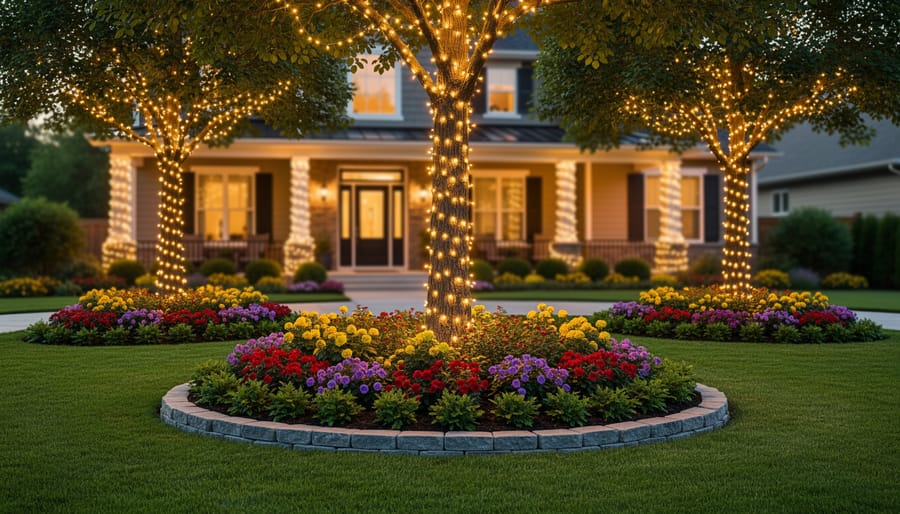
Wrapping trees and architectural columns transforms them into living pillars of light that command attention from every angle. The vertical dimension these features provide creates a sense of grandeur that flat lighting simply cannot achieve, drawing eyes skyward and adding sophisticated depth to your entire front yard display.
The trunk-wrapped tree remains one of the most striking techniques in professional lighting design. Starting at the base and spiraling upward in consistent bands creates an elegant effect that showcases the tree’s natural form while adding luminous interest. For a truly professional result, maintain uniform spacing between wraps, typically four to six inches apart, and keep the strand taut against the bark without causing damage. Deciduous trees that have lost their leaves become sculptural elements when wrapped, their branch structure highlighted against the night sky. Evergreens offer a different beauty, with lights nestled among the foliage creating a warm glow that appears to emanate from within.
Columns present their own opportunities for creative expression. The classic spiral technique involves wrapping lights in a barber-pole pattern from base to capital, creating dynamic movement that guides the eye to your entrance. Alternatively, vertical strands running the column’s length produce clean, contemporary lines that complement modern architecture. Porch posts benefit from similar treatment, becoming glowing sentries that frame your doorway.
Proper installation requires attention to Christmas light safety and technique. Use clips or hooks specifically designed for outdoor use, never staples or nails that damage surfaces. Test all strands before installation, and ensure connections stay protected from moisture. The effort invested in wrapping creates vertical drama that elevates your entire display.
3. Pathway and Walkway Lighting: Guiding the Journey
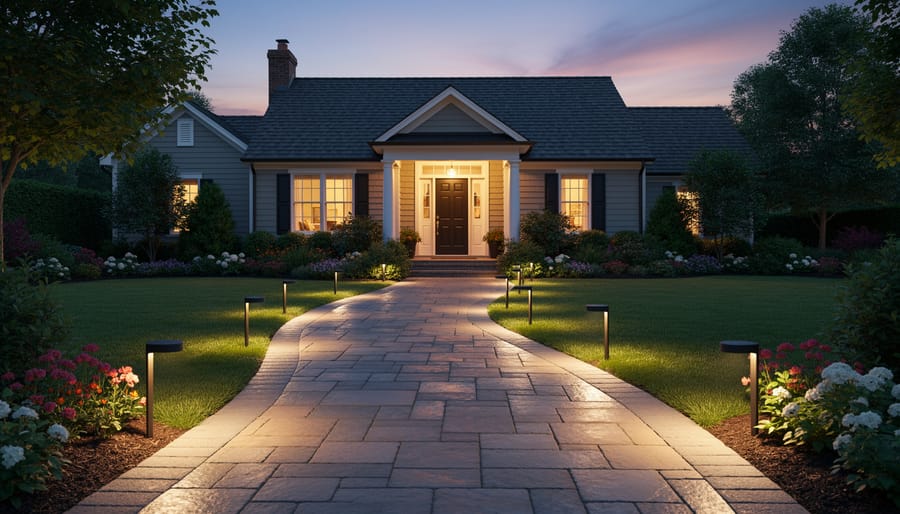
Your pathway lighting tells a story before guests even reach your door. When executed thoughtfully, these guiding lights transform a simple walk to your entrance into an enchanting journey through your holiday display, combining practical safety with genuine visual magic.
The spacing and rhythm of pathway lights create the entire experience. Professional designers typically place markers every 18 to 24 inches along straight walks, creating a gentle visual flow that naturally draws the eye forward. For curved pathways, slightly closer spacing on the inside curve maintains consistent illumination and prevents dark gaps. This measured approach prevents both the overcrowded look of lights placed too close together and the disconnected feel of markers spaced too far apart.
Height considerations dramatically affect the mood you create. Low-profile stake lights positioned six to eight inches above ground provide subtle guidance that enhances rather than dominates your landscape. These work beautifully when you want pathway lighting to complement other features like wrapped trees or illuminated windows. Taller candy cane markers, reaching 24 to 36 inches, make bold statements perfect for wider walkways or when you want the path itself to serve as a primary focal point.
The style of your pathway markers should harmonize with your overall display. Classic white luminarias offer timeless elegance that suits traditional homes, while colorful candy cane stakes bring playful energy to family-friendly displays. LED rope light borders provide modern, continuous illumination that works especially well for contemporary architecture. Whatever style you choose, ensure your pathway lighting connects visually with your other elements, from roofline displays to window light clips that frame your home’s features, creating a cohesive welcome that extends from street to front door.
4. Window Frame Lighting: Bringing Warmth from Within
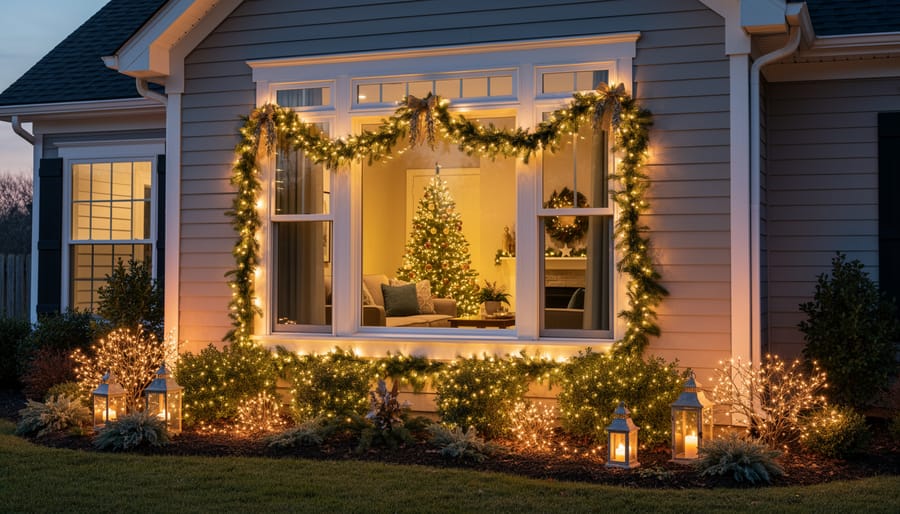
Window frame lighting holds a special place in Christmas decorating because it creates that unmistakable glow of home that transforms houses into beacons of warmth during dark winter evenings. When you outline each window with lights, you’re essentially extending your interior holiday spirit to the outside world, creating a visual bridge that welcomes visitors and passersby alike.
The classic approach uses warm white mini lights that create clean, crisp lines around window frames, making them appear larger and more prominent while highlighting your home’s architectural character. This technique works especially well on homes with multiple front-facing windows because it creates a unified, symmetrical pattern that’s pleasing to the eye from the street.
Color coordination matters significantly with window lighting. If your interior decorations feature warm tones and traditional elements, stick with warm white or soft gold exterior lights. For homes with contemporary interiors or colorful decorating schemes, consider matching your window frame colors to complement what’s visible through the glass. The goal is creating harmony rather than competition between indoor and outdoor displays.
Installation requires careful attention to attachment methods that protect your window frames and trim. Professional-grade clips designed specifically for window edges provide secure holds without nails or staples that damage surfaces. Starting at the top corners and working your way around ensures even spacing and prevents sagging, while keeping cord connections away from moisture-prone areas extends the life of your display.
The real magic happens at dusk when indoor lights combine with framed window lighting to create dimensional warmth that no other technique quite captures.
5. Landscape Uplighting: Showcasing Natural Beauty
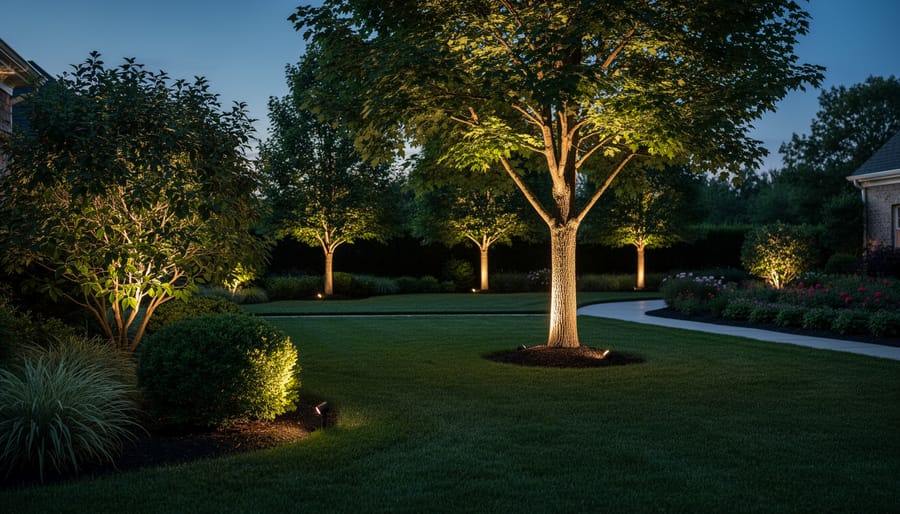
Ground-mounted spotlights transform your landscape into a theatrical stage where nature takes center stage. Unlike traditional overhead lighting that flattens perspective, uplighting creates dramatic shadows and reveals textures you never noticed during daylight hours. The mature oak that anchors your front yard becomes a sculptural centerpiece when washed with warm light from its base, its branches stretching upward like a natural cathedral ceiling against the night sky.
The magic lies in positioning fixtures three to six feet from the trunk, angling them upward at 30 to 45 degrees. This placement illuminates the bark’s texture while casting intricate branch patterns that dance across nearby surfaces. For evergreens and specimen plants, tighter angles reveal their dense foliage structure, while wider angles create softer, more ambient effects that blend into the overall composition.
Color washing adds another layer of artistry to landscape uplighting. While warm whites complement most architectural styles and enhance natural tones, strategic use of colored filters can create stunning focal points. A soft blue wash on blue spruce amplifies its natural hue, while amber tones deepen the richness of ornamental grasses and deciduous trees. The key is subtlety, lighting should enhance existing beauty rather than compete with it.
Consider layering multiple fixtures on larger specimens, placing some to highlight the canopy and others to graze the trunk. This technique creates depth that pulls viewers’ eyes through different planes of your landscape, making even modest yards feel more expansive and professionally designed.
6. Entry Door and Porch Focal Points: The Heart of Your Display
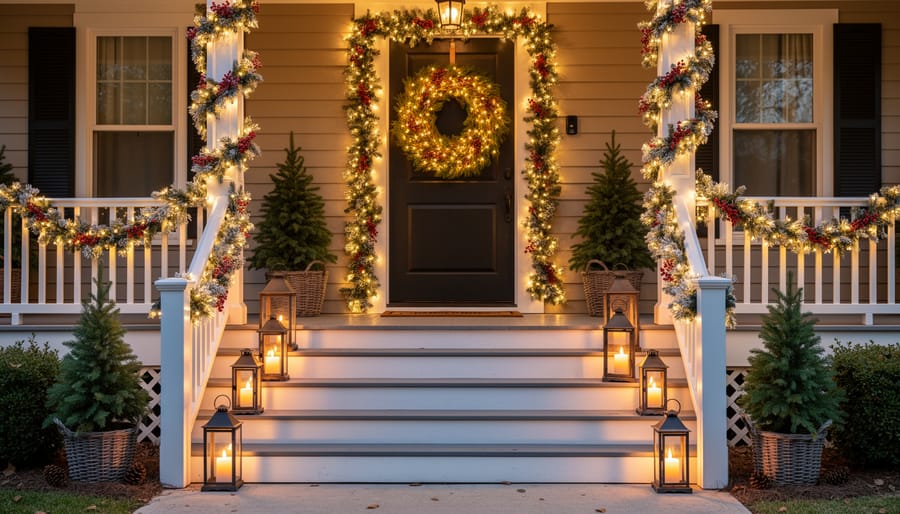
Your entry door serves as the emotional centerpiece of your entire front yard display, where guests pause before entering and where your design philosophy speaks loudest. This concentrated area offers the richest opportunity for layering textures, dimensions, and light to create a truly memorable impression.
Start with a foundation layer of fresh or high-quality artificial garland draped around your door frame, choosing materials with varied textures like mixed pine, cedar, and eucalyptus. Weave warm white mini lights through the garland at a density of approximately 100 lights per six-foot section, ensuring even distribution that highlights the greenery’s depth. Add a complementary wreath to your door itself, selecting one that echoes the garland’s materials while introducing a focal element like ribbon, berries, or pine cones.
Build your second layer with swags positioned above the door or cascading from porch columns, each lit with their own strand to create dimensional shadows and highlights. This vertical layering draws the eye upward and makes standard-height doorways appear more grand and welcoming.
Flank your entrance with matching illuminated planters or potted evergreens wrapped in lights, creating symmetrical anchors that frame the entire composition. For porches with adequate space, incorporate smart lighting controls that allow you to dim or change colors for different occasions, transforming your entrance from elegant white for dinner parties to festive multicolor for family gatherings.
The key to entry lighting success lies in abundance without chaos. Every element should enhance rather than compete, creating a cohesive welcome that feels both abundant and intentional.
7. Ground Display Elements: Adding Personality and Playfulness
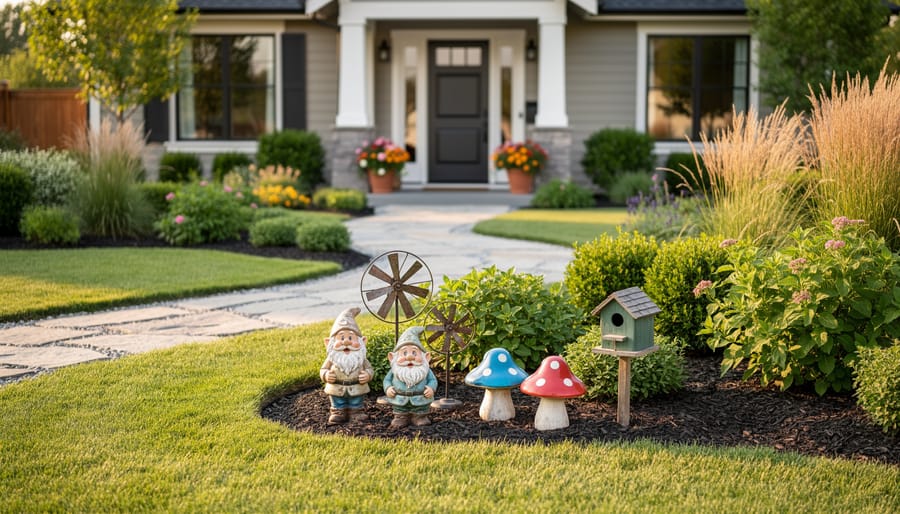
Ground displays bring your front yard to eye level, creating moments of delight that invite closer inspection and personal connection. While architectural lighting establishes the framework, these elements tell your unique story and inject personality into your landscape.
The key to successful ground displays lies in intentional placement rather than random scattering. Position your largest elements first, treating them as anchor pieces that draw the eye to specific zones. A beautiful nativity scene gains impact when placed where viewers naturally pause, perhaps flanking your walkway or nestled beneath a prominently lit tree. Illuminated deer families create graceful vignettes when arranged as if moving through your landscape, while elegant light sculptures serve as standalone art pieces that command their own space.
Scale matters tremendously. A single oversized snowglobe or carousel can make a bolder statement than a dozen small figures competing for attention. Match the size of your displays to your property’s proportions. Larger yards accommodate grand installations, while smaller spaces shine with curated, refined pieces that don’t crowd the landscape.
Resist the temptation to fill every available inch. Negative space allows each element to breathe and maintains visual balance. Group related items to create cohesive scenes rather than dotting individual pieces across the yard. This approach creates intentional focal points that complement rather than compete with your architectural lighting.
For a polished, coordinated look that feels both personal and professionally executed, consider how ground elements integrate with your overall custom holiday design. The most memorable displays achieve harmony between structure and whimsy, permanence and playfulness.
8. Synchronized Animation: Modern Magic Through Technology
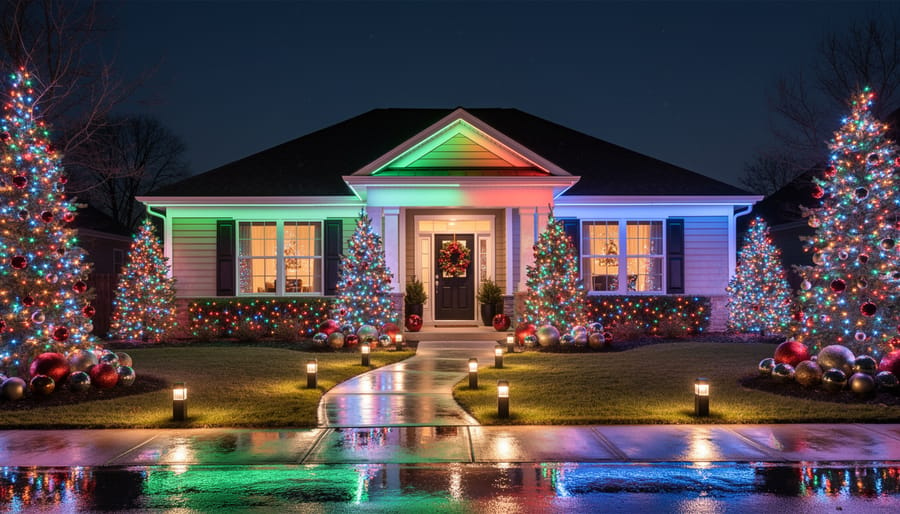
Programmable lighting technology has revolutionized front yard Christmas displays by adding movement, color transitions, and choreographed sequences that were once only possible at commercial venues. These systems use LED controllers connected to multiple lighting zones throughout your property, allowing you to create dynamic scenes that shift colors, pulse to music, or tell visual stories through coordinated timing. The technology ranges from simple plug-and-play controllers with pre-programmed patterns to sophisticated computer-controlled systems that can synchronize thousands of lights with musical soundtracks.
The beauty of synchronized animation lies in its versatility. You can program subtle effects like gentle color fades across your roofline that create an elegant, flowing appearance, or design dramatic sequences where different sections of your display illuminate in timed succession, drawing attention across your entire landscape. Many homeowners combine traditional static elements, like wrapped trees and pathway lights, with animated focal points at the entrance or along the roofline, creating depth and visual interest without overwhelming the overall design.
When you design your display with animation in mind, consider starting with one or two animated zones rather than programming your entire property. This approach allows you to add modern flair while maintaining the warm, classic feel that makes Christmas lighting timeless. The controller becomes the hidden magic behind the scenes, transforming static lights into a living display that changes throughout the evening.
Bringing Your Vision to Life
Your front yard’s transformation into a festive wonderland begins with understanding your home’s unique character. Perhaps you’ll start with elegant roofline illumination and layer in pathway lights for the first year, then add wrapped trees and synchronized elements as your vision evolves. The beauty of these eight approaches lies in their flexibility, they work brilliantly together as a comprehensive display or shine individually when you’re focusing on specific features that speak to your home’s architecture.
The difference between a memorable display and a magical one often comes down to execution. Professional lighting designers bring years of experience understanding electrical load calculations, weather-resistant installation techniques, and the artistic eye needed to balance color, brightness, and spacing. They see potential in architectural details you might overlook and know how to troubleshoot challenges like uneven rooflines or difficult-to-reach peaks. Whether you’re tackling one signature element this season or designing a complete transformation, the goal remains the same: creating a front yard that reflects your personal style while bringing joy to everyone who passes by. Your home deserves lighting that celebrates its best features, and these ideas provide the roadmap to make that vision a reality.
Frequently Asked Questions
When should I install my front yard Christmas lights?
Most homeowners begin installation in mid-November to have displays ready by Thanksgiving weekend. Professional installers typically start booking appointments in October, with peak installation occurring during the first three weeks of November when weather conditions remain favorable and crews can work efficiently before the holiday rush.
How much do professional Christmas lighting installations typically cost?
Professional installations generally range from $800 to $3,500 for front yard displays, depending on home size, design complexity, and materials used. This investment includes design consultation, all equipment, installation, maintenance throughout the season, and takedown with proper storage, eliminating the time, effort, and safety risks of DIY approaches.
Are LED Christmas lights worth the investment?
LED lights cost more upfront but consume 80-90% less energy than traditional incandescent bulbs while lasting up to 25 times longer. They stay cool to the touch, reducing fire risks, and their durability means they withstand weather conditions better, making them the clear choice for both safety and long-term value.
How can I prevent damage to my home during installation?
Use clips designed specifically for your attachment surfaces rather than staples or nails that create holes and potential water intrusion points. Professional installers know which fastening methods work for different materials, shingles, gutters, stucco, brick, and can secure displays firmly without compromising your home’s exterior or voiding warranties.
These practical considerations help you plan your front yard lighting project with confidence. Whether you’re tackling installation yourself or working with professionals, understanding timing, costs, and proper techniques ensures your display looks spectacular while protecting your home and your investment in quality materials.