
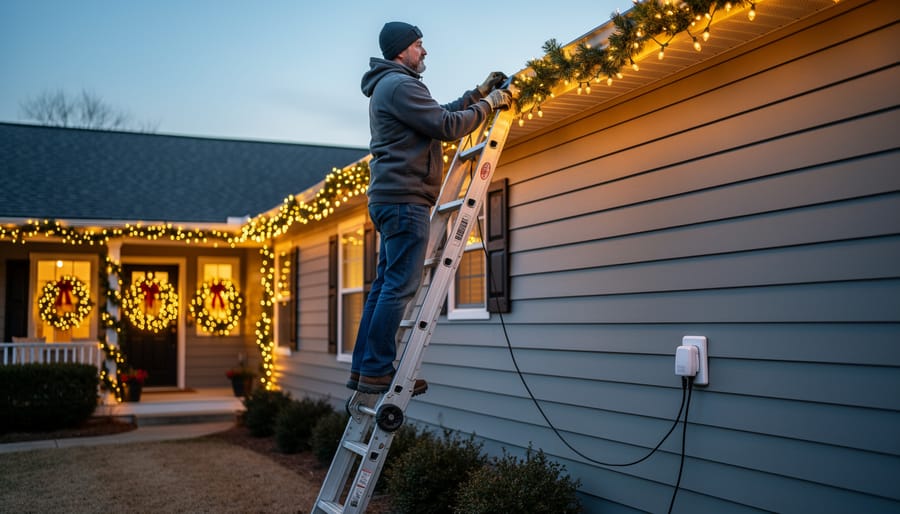
Christmas light safety comes down to twelve essential practices: inspect every strand before hanging, use outdoor-rated products where they belong, avoid overloading circuits, secure connections away from water, and always turn off displays when you’re asleep or away. These steps prevent the majority of holiday decorating accidents, from electrical fires to falls.
The magic of a brilliantly lit home shouldn’t come with worry. Each year, fire departments respond to hundreds of home fires caused by Christmas decorations, and emergency rooms treat thousands of fall-related injuries during the holiday season. The good news? Nearly all of these incidents are preventable with proper planning and awareness.
Whether you’re draping lights along your roofline, wrapping them around your favorite tree, or creating an elaborate display that delights the neighborhood, understanding the fundamentals of electrical safety and ladder use protects both your family and your property. The difference between a memorable holiday season and a dangerous one often comes down to taking a few extra minutes before you plug in that first strand.
Professional installers bring years of experience to every project, combining artistic vision with rigorous safety protocols. But if you’re planning to handle the installation yourself this season, the right knowledge transforms a risky task into a confident one. Small choices matter: checking for frayed wires, matching wattage limits, choosing stable footing, and respecting height limitations all add layers of protection.
This guide walks you through twelve specific safety tips that address the most common hazards, from selecting the right lights to storing them properly when the season ends. Consider these your foundation for creating a display that’s as safe as it is stunning.
Why Christmas Light Safety Matters
Every year, the excitement of holiday decorating brings families together to create sparkling displays that light up neighborhoods and spread seasonal cheer. Yet behind those twinkling lights lies a set of real hazards that demand our attention. Understanding these risks transforms decorating from a potentially dangerous task into a safe, joyful tradition.
Electrical hazards top the list of concerns when working with holiday lights. Damaged wiring, overloaded circuits, and improper connections can spark fires that threaten homes and families. The U.S. Consumer Product Safety Commission reports that faulty holiday lights and decorations contribute to hundreds of fires each season, causing injuries and property damage that could have been prevented with proper precautions.
Ladder accidents present another serious concern. Falls from heights send thousands of people to emergency rooms during the holiday season, with injuries ranging from minor bruises to broken bones and head trauma. Working at elevation while managing light strands, tools, and extension cords creates hazardous conditions that require complete focus and proper technique.
Weather exposure adds another layer of risk. Cold temperatures reduce dexterity and increase the chance of mistakes, while wet or icy conditions make surfaces treacherous. Decorators face the challenge of working outdoors in conditions that test both comfort and safety, often while handling electrical equipment.
These hazards are not meant to dampen your holiday spirit. They simply remind us that creating magical displays requires respect for the work involved and commitment to doing it safely.
What to Consider Before You Start
Before you climb that first ladder or unwind the first strand, thoughtful planning sets the stage for a display that’s both breathtaking and secure. Taking time to assess your unique situation makes all the difference between a smooth installation and an afternoon of frustration or, worse, a preventable accident.
Start by walking around your home with fresh eyes, observing the architecture and potential mounting points. Notice the height of eaves, the angles of rooflines, and the accessibility of areas you want to illuminate. Some architectural features, like steep pitches, dormers, or three-story peaks, demand special equipment or techniques that go beyond basic ladder work. Honestly evaluate whether these elements suit your experience level and available tools.
Next, consider your home’s electrical infrastructure. Locate outdoor outlets and determine which circuits they’re on. If you’re planning an elaborate display, calculate whether your existing outlets can handle the load without tripping breakers. Older homes sometimes need electrical upgrades before supporting modern lighting installations safely.
Weather timing matters more than many people realize. Check the extended forecast and choose installation days with mild temperatures, dry conditions, and calm winds. Working in ideal weather not only keeps you comfortable but also ensures adhesives bond properly and you maintain steady footing.
Gather everything you’ll need before starting:
- Sturdy ladder appropriate for your highest installation point
- Outdoor-rated extension cords and GFCI-protected power strips
- Light clips, hooks, and fasteners designed for your home’s surfaces
- Work gloves for grip and protection
- Light tester or multimeter for checking strands
- Replacement bulbs and fuses matching your light specifications
Finally, be honest about your physical capabilities. Installing holiday lights requires climbing, reaching, balancing, and working in cold conditions for extended periods. If you have concerns about heights, balance, or stamina, there’s wisdom in recognizing those limitations. The most beautiful displays come from preparation that respects both your vision and your safety boundaries, whether you’re tackling the project yourself or bringing in experienced hands who do this work day in and day out.
12 Safety Tips for Hanging Christmas Lights
1. Inspect All Light Strands Before Installation
Before you climb a single rung or unravel the first strand, spread your lights across a flat surface and examine them carefully. Run your hands along the entire length of each cord, feeling for any rough spots, exposed copper wiring, or cracked insulation. Look closely at each bulb socket for cracks, corrosion, or loose connections that could allow moisture inside.
Test each strand by plugging it in indoors first. Flickering, dimming, or sections that refuse to light signal internal problems that could worsen once exposed to winter weather. Pay special attention to the male and female plug ends, where repeated coiling and storage often create weak points. Discard any strand showing damage, no matter how minor it seems.
This simple inspection takes just minutes per strand but prevents house fires, electrical shocks, and circuit failures that could darken your entire display mid-season.
2. Use Outdoor-Rated Lights for Exterior Displays
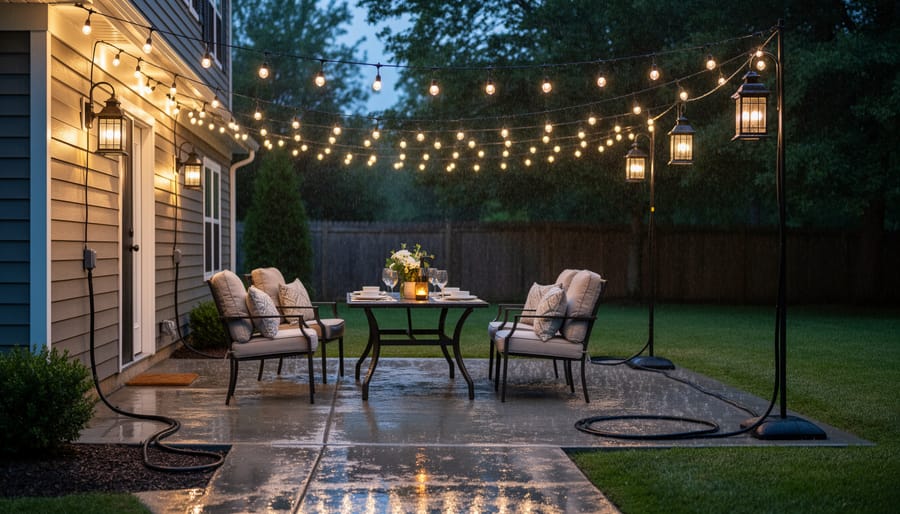
The packaging label tells the whole story before you even unwind the first strand. Indoor lights might cost less and look similar, but they lack the weatherproof construction that exterior displays demand. Outdoor-rated lights feature heavier insulation, sealed sockets that resist moisture infiltration, and materials engineered to withstand temperature swings, UV exposure, and precipitation. Use lights rated for outdoors to prevent dangerous electrical shorts and premature failure.
Look for clear UL or ETL certification marks on the box, specifically noting outdoor use. The rating isn’t just a suggestion; it’s the difference between lights that endure December storms and those that become hazards. Indoor lights exposed to rain, snow, or even morning dew can develop shorts, trip circuits, or worse. When you’re creating that magical glow along your roofline or wrapping your front porch columns, outdoor-rated strands give you both the durability and the safety your display deserves.
3. Choose the Right Ladder and Use It Properly
Selecting the right ladder for your holiday lighting project is just as important as choosing the right lights. For most single-story homes, a sturdy six-foot step ladder provides safe access to eaves and rooflines. Multi-story homes require extension ladders, which should extend at least three feet above the point where you’ll be working. Always choose a ladder rated for your weight plus the weight of your supplies, a Type I rating (250 pounds) or higher offers a comfortable safety margin.
Proper setup makes all the difference. Position your ladder on firm, level ground, and if you’re working on soil, place a piece of plywood underneath for stability. Set extension ladders at the correct angle, the base should be one foot away from the wall for every four feet of height. Never overreach to the side; it takes just seconds to climb down and reposition your ladder, but recovering from a fall takes much longer. Keep your hips between the ladder rails, and if you can’t comfortably reach your work area, move the ladder rather than stretching beyond your stable zone.
4. Never Overload Electrical Circuits
Overloading circuits is one of the most common electrical hazards during the holiday season. Each household circuit has a maximum capacity, typically 15 or 20 amps, and exceeding this limit can trip breakers or create dangerous overheating conditions.
Start by checking the wattage rating on your light strands. Most packages display this information clearly. Calculate your total load by adding the wattage of all lights on a single circuit, ensuring you stay well below the maximum. As a general rule, connect no more than three light strands end-to-end, even if the wattage seems manageable. This prevents voltage drop and reduces fire risk.
Use heavy-duty, outdoor-rated extension cords with adequate gauge for your needs. Indoor cords can’t handle outdoor conditions or higher loads. Similarly, choose outdoor-rated power strips with built-in circuit protection. Never daisy-chain multiple power strips together, as this compounds overload risks and creates potential failure points that could spark or melt.
5. Keep Electrical Connections Away from Water
Water and electricity form a dangerous combination that can lead to short circuits, equipment damage, and serious shock hazards. When hanging outdoor Christmas lights, protecting every electrical connection from moisture becomes essential for both safety and display longevity.
Ground-level connections are particularly vulnerable to puddles, snow melt, and morning dew. Elevate plug connections whenever possible by securing them to posts, walls, or railings at least six inches above ground. Wrap all outdoor connections with waterproof electrical tape, then enclose them in weatherproof covers specifically designed for outdoor holiday lighting. These protective boxes feature sealed gaskets that prevent rain and snow from reaching the plugs inside.
Never run cords through standing water or snow piles. If your display requires connections in exposed areas, create a small protective shelter using an inverted bucket or plastic cover, ensuring adequate ventilation to prevent heat buildup. Check all connection points after storms to confirm water hasn’t penetrated the protective barriers.
6. Use Proper Fasteners and Clips
The way you attach your lights makes all the difference between a safe installation and a potential hazard. Staples and nails might seem like quick solutions, but they can pierce wire insulation, creating dangerous electrical shorts or exposing you to shock risks. Even a small puncture compromises the protective coating that keeps moisture and electricity safely separated.
Instead, invest in clips and hooks specifically designed for holiday lights. Gutter clips slide easily onto roof edges without requiring any penetration. All-in-one shingle tabs tuck under roofing materials and grip light strands securely. For siding, vinyl-safe hooks hold lights firmly without leaving marks or holes. Window frame clips and suction cups work beautifully for glass surfaces.
These purpose-built fasteners protect both your lights and your home’s exterior. They distribute weight evenly, prevent wire damage, and remove cleanly after the season ends. While they cost slightly more than a box of staples, they’re reusable year after year and preserve your home’s architectural integrity while keeping your family safe.
7. Stay Clear of Power Lines
Overhead power lines pose one of the most serious hazards during holiday decorating. Always maintain at least ten feet of clearance from utility lines, both when positioning ladders and when handling light strands or extension poles. Metal ladders conduct electricity, making contact with power lines potentially fatal.
Before you begin installation, survey your entire property for overhead lines. They’re not always obvious, especially near eaves, rooflines, or between structures. Utility lines carry thousands of volts, and you don’t need direct contact for electricity to arc through the air. Even a near-miss with a long strand of lights or aluminum ladder can create a deadly situation.
If your display requires working near power lines, this is absolutely a job for professionals with specialized training and equipment.
8. Work with a Partner
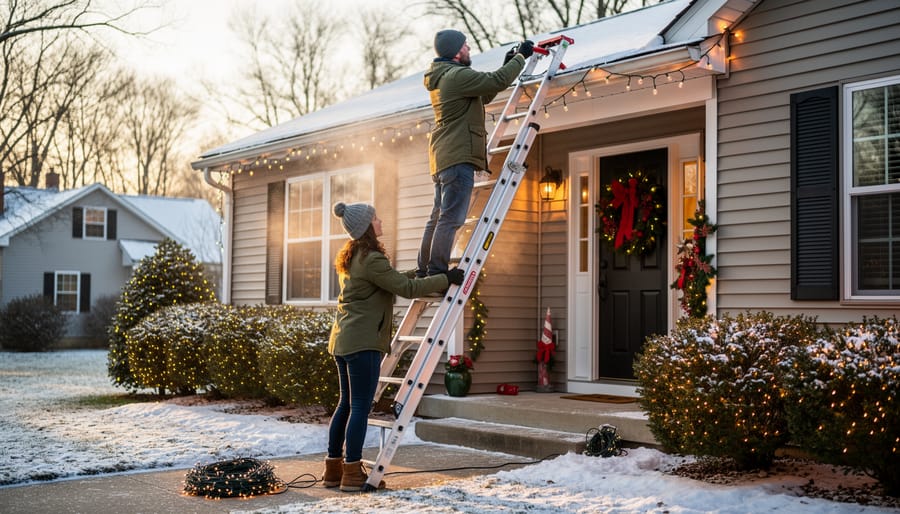
Installing holiday lights becomes significantly safer when you have another person working alongside you. A partner can stabilize your ladder as you climb, dramatically reducing the risk of dangerous shifts or wobbles that cause thousands of falls each year. They’ll spot hazards you might miss from your elevated position, exposed nails, loose gutters, or approaching weather changes, and hand up light strands and tools so you’re not making unnecessary trips up and down.
Beyond the practical advantages, having someone nearby provides crucial emergency assistance if something goes wrong. They can call for help immediately, provide first aid, or safely assist you down if you become injured or dizzy. The few extra minutes spent coordinating with a partner pays dividends in both safety and efficiency, turning a risky solo endeavor into a manageable team effort that keeps the holiday season joyful rather than frightening.
9. Check Weather Conditions
Mother Nature doesn’t take holidays off, and neither should your awareness of weather conditions when installing Christmas lights. Working on ladders or rooftops during rain, snow, or ice transforms routine tasks into genuine hazards, wet surfaces become slippery, cold metal conducts electricity more readily, and reduced visibility obscures potential dangers.
Plan your installation for dry, calm days when temperatures stay above freezing. Wind gusts above 15 mph make ladder work dangerous and handling light strands nearly impossible. If you’re working in cold weather, dress in layers that allow full range of motion while keeping you warm, bulky clothing can catch on equipment or restrict your grip. Insulated, non-slip footwear provides essential traction on roofs and ladders.
Watch for sudden weather changes, especially during late fall and early winter when conditions shift quickly. If rain or snow begins while you’re working, stop immediately and secure any partially installed lights. The magical display you’re creating will wait for safer skies, your wellbeing cannot.
10. Use GFCI-Protected Outlets
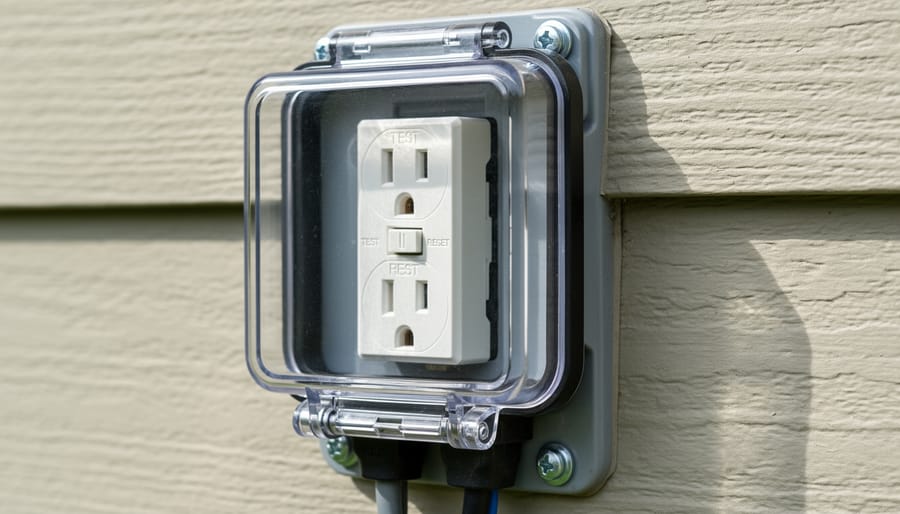
Ground fault circuit interrupters protect you from electrical shock by instantly cutting power when they detect even tiny current leaks. These devices are essential for outdoor holiday lighting because moisture, snow, and wet conditions create perfect scenarios for dangerous ground faults that could otherwise cause serious injury.
Most modern homes have GFCI outlets installed in outdoor locations, bathrooms, and kitchens. You’ll recognize them by the “test” and “reset” buttons between the outlet slots. Before plugging in your holiday lights, press the test button, the reset button should pop out, indicating the device works properly. Push reset to restore power. If the GFCI doesn’t trip when tested, or won’t reset, call an electrician immediately.
If your outdoor outlets lack GFCI protection, you have two options: hire an electrician to replace standard outlets with GFCI versions, or use portable GFCI adapters that plug directly into existing outlets. Never skip this protection. Water and electricity create life-threatening combinations, and GFCI devices provide your critical safety barrier.
11. Turn Off Lights When Away or Sleeping
Your holiday lights bring joy and wonder to your neighborhood, but they need rest too. Turning off your display when you’re away from home or sleeping is a simple yet crucial safety practice that protects your property while managing energy costs.
Even high-quality LED lights generate some heat, and leaving them on continuously increases the risk of overheating, electrical failures, or potential fire hazards. Traditional incandescent bulbs pose even greater risks when left unattended. Beyond safety, continuous operation adds unnecessary wear to your lighting system and significantly impacts your electricity bill throughout the season.
The solution is beautifully simple: install outdoor-rated timers that automatically control your display. Modern timers let you program your lights to illuminate during peak evening hours when your family and neighbors can enjoy them most, typically from dusk until bedtime. This approach gives you the best of both worlds, consistent holiday ambiance without constant monitoring, plus the peace of mind that comes from responsible energy management and reduced fire risk.
12. Know When to Call a Professional
Some decorating projects are best left to the professionals who do this work every day. If your home has multiple stories, steep rooflines, or intricate architectural details that require specialized equipment or expertise, professional installers bring the right tools and experience to handle these challenges safely. They understand how to navigate complex spaces while protecting both people and property.
Physical limitations, time constraints, or simply wanting peace of mind are all valid reasons to bring in experts. Professional teams have trained crews, commercial-grade ladders, proper insurance, and years of experience reading roof pitches and electrical systems. They know how to create stunning displays that showcase your home’s unique character while adhering to every safety principle.
The true value lies in combining artistic vision with technical expertise. Professional installers transform homes into breathtaking holiday showcases while eliminating the risks associated with DIY installation. They handle everything from design consultation to takedown, letting you enjoy the magic of the season without the worry.
Creating Your Safe and Beautiful Holiday Display
Creating a holiday display that captures the magic of the season while keeping your loved ones safe isn’t just possible, it’s the foundation of truly memorable celebrations. These 12 safety tips work together to protect you from electrical hazards, ladder accidents, and weather-related risks while you transform your home into a festive masterpiece.
Safety and beauty have never been opposing forces. When you inspect your lights before installation, use proper equipment, respect electrical limits, and work mindfully around your home’s architecture, you’re creating the conditions for displays that shine brilliantly all season long without worry. Every clip properly placed, every connection protected from moisture, every circuit carefully calculated adds up to peace of mind that lets you fully enjoy your creation.
Whether you tackle the installation yourself armed with these guidelines or partner with experienced professionals who bring both technical expertise and artistic vision to your project, the result is the same: a stunning display that brings joy without compromise. This holiday season, let your lights reflect not just festive cheer but also the care and thoughtfulness that make your home a safe haven for celebration.
Common Questions About Christmas Light Safety
The journey to a safely illuminated home often raises questions as families prepare for the season. Understanding the practical details of safe holiday lighting helps homeowners make confident decisions that protect their properties and loved ones while achieving the festive atmosphere they envision.
How long should Christmas lights stay on each day?
For safety and energy efficiency, limit operation to 4-6 hours during peak evening hours, typically from dusk until 10 or 11 PM. Using timers ensures lights turn off automatically, reducing fire risk while you sleep and extending the lifespan of your display.
Can LED lights be used safely in all weather conditions?
Yes, outdoor-rated LED lights withstand rain, snow, and freezing temperatures when properly installed with weatherproof connections. Their cool operation and durable construction make them the safest choice for exterior displays in harsh winter conditions.
When should holiday lights be taken down?
Remove lights before late winter weather causes ice buildup or damages connections, typically by mid-January. Take them down during dry, mild weather to ensure safe ladder work and prevent moisture from being sealed inside during storage.
What makes professional installation safer than DIY?
Professional installers bring specialized equipment, electrical expertise, and experience working at heights safely. They understand proper load calculations, weatherproofing techniques, and architectural considerations that prevent common hazards homeowners might overlook.
How should lights be stored after the season?
Wrap each strand loosely around cardboard or storage reels to prevent wire damage, store in a dry location away from temperature extremes, and label any strands with issues for inspection before next season. Proper storage extends light lifespan and maintains safety for years to come.
These common concerns reflect the thoughtful approach homeowners take when balancing festive ambitions with practical safety considerations. Whether installing lights yourself or partnering with professionals, understanding these fundamentals ensures your holiday season sparkles with both beauty and peace of mind.